What is a Daily Margin Statement? How Would You Read It?
What is a Margin Statement?
As an investor, you are entitled to receive account statements from your broker or bank. These statements give you a regular update on your account status and the value of your investments. These statements and messages are sometimes difficult to decipher, especially for a new investor. But these are crucial and mandatory. Some of these statements are mandatory, as per SEBI, for investor communication and clarity.
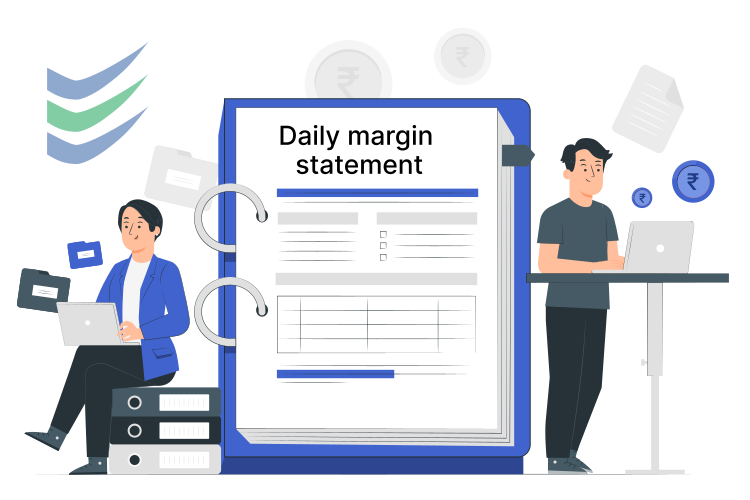
As an investor, you must read these statements to get a clear picture of your holdings and charges. These account statements also give you an idea of any actionable for you related to your account so that you do not incur additional charges or penalties.
A daily margin statement is one of these statements that your broker receives every day in your mailbox. The Daily Margin Statement reporting is a security measure for investors from any fraudulent activity. Daily reporting prevents any broker from misusing idle funds in any investor's account or transferring the cash or stock holdings to another account.
Let us understand further, what is the margin statement, how to read a DMS, and how to understand your account activity.
What is Margin?
A minimum amount needs to be kept with the broker for trading in stock markets as security before a trade is placed. This fund is called Margin. Margin is required to alleviate the risk of an investor not paying for a share after purchase or delivering the share sold through the stock exchange.
SEBI mandates a minimum margin to be deposited for all investors. The margin amount is provided by a few brokers at their discretion to investors for trading and investing. This is known as Margin Trading. With margin trading, you can avail a limit against your existing stock holdings to make more investments and earnings. In effect, you pay only a percentage or Margin for investing, and the remaining amount is a loan from the stockbroker.
The Daily Margin Statement - Explained
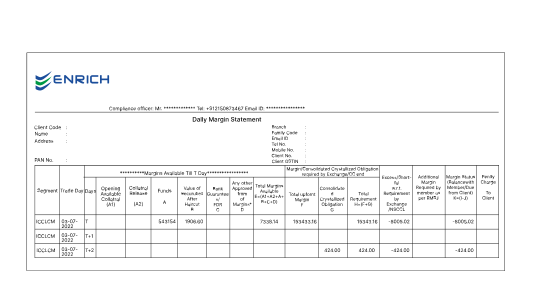
To read the Daily Margin Statement properly, let us learn about the terms used in the statement:
-
Segment: This column shows you the clearinghouse, e.g., NSE, BSE, and the market segment, e.g., Equity, F&O, Mutual Funds, etc.
-
Trade Day: This column shows which trade was made in a particular segment.
-
Days: This column shows the margin status for three trading days since Margin is required to execute the trade.
-
Funds A: This column shows the fund available for investment in respective segments.
-
Value of Securities after haircut B: When shares are sold from your account, your account is debited and shared reflected in the broker's pool account till T+2 settlement. The Margin is applicable on shares in the pool account as well. The Margin from pledged shares reflects here.
-
Total Margin Available E: The sum of Funds and Value of Securities column is the sum. This is the total margin amount available for trades.
-
Total Upfront Margin (Required) F: This column shows the total upfront margin used/blocked for all trades to be settled by the exchange.
-
Consolidated Crystallised Obligation G: This column reflects the MTM Market to Margin required for all not settled trades.
-
Total Margin Required H: This column shows the total Margin and MTM margin requirements.
-
Excess Shortfall I: This column tells you if the available Margin had been utilized. If there is a shortfall, it shows the required shortfall amount to be deposited so that you do not incur any penalty charges. A positive figure indicates the margin amount available, and a negative figure shows the shortfall amount you need to deposit. It is calculated as the 'Total margin available' amount minus the 'Total requirement' amount.
-
Additional Margin as per RMS J — This column shows any additional margins blocked by the broker as an extra surveillance margin. E.g., some brokers charge additional margins for commodity derivatives and physical delivery contracts in the week they expire.
-
Margin Status K: This column shows the Margin available to you for trade for the next trading day. A minus figure shows a shortfall, and you need to add more funds to trade further.
-
Penalty: This column shows any penalty amount charged to your account.
Conclusion:
Similarly, the span margin calculator assists in calculating the Margin required for trading in equity derivatives, commodity derivatives, and currency derivatives segments before a trade are placed in real-time. Span is used to creating situations of likely changes in underlying prices and volatile market conditions to understand the maximum erosion that can happen to your portfolio within a day. The margin requirement is then decided so that it is adequate to cover the single-day loss if it occurs.
Frequently Asked Questions
1. What is a Daily Margin Statement?
A Daily Margin Statement provides information about a trading account's margin position, including margin utilised, available margin, collateral and other relevant margin-related details.
2. Why do brokers provide a Daily Margin Statement?
A Daily Margin Statement helps traders monitor their margin position, understand applicable obligations and keep track of relevant account information.
3. How do I read a Daily Margin Statement?
Check the statement date, opening balance, credits, debits, collateral, margin utilised, available margin and any applicable margin shortfall or obligations.
4. What is margin utilised in a Daily Margin Statement?
Margin utilised refers to the portion of available margin being used to support eligible trading positions or meet applicable margin requirements.
5. What is available margin?
Available margin generally refers to the margin that remains available after considering applicable utilisation and requirements. The exact calculation may vary depending on the broker and trading segment.
6. What is collateral in a margin statement?
Collateral generally refers to eligible securities or other approved assets pledged to support applicable margin requirements. The value considered as collateral may be reduced by an applicable haircut.
7. What happens if there is a margin shortfall?
A margin shortfall may require the trader to provide additional funds or eligible collateral. The broker may take action according to its applicable policies and regulatory requirements.
8. Is a Daily Margin Statement the same as a Contract Note?
No. A Daily Margin Statement primarily provides margin-related information, while a Contract Note records applicable executed trades and associated transaction details.