Top Semiconductor Stocks for 2025: Capitalizing on India's Digital Expansion
Semi-Conductor Stocks
Semiconductor stocks are the listed shares of companies involved in the design, development, and production of semiconductors in India. These semiconductors are main electronic components that regulate electrical currents in devices such as smartphones, computers, and various other electronic gadgets. The growing need for electronic devices is met by semiconductor companies which produce innovative products.
Semiconductor Industry in India
India's semiconductor industry is seeing historic growth in 2025 with the spread of electronics, automotive electronics, and telecom equipment driving demand. The market has grown to approximately USD 26 billion in value in 2024 and is estimated to swell to USD 88 billion by 2028 with a good annual growth rate of almost 18%. It is expected to surpass USD 110 billion by 2032, marking technology's growing presence in Indian industries.
Current Industry Scenario
The country continues to import the lion's share of its semiconductor needs from East and Southeast Asian economies; however, there is a strong thrust towards greater indigenous self-sufficiency induced by targeted government actions. The main policies governing the industry are:
Semiconductor Fabs Incentive Scheme (SFMIS): The central government has committed more than $10 billion to attract global players, establish fabrication facilities domestically, and lower dependence on imports.
Production Linked Incentive (PLI) Scheme: Enlarged in 2024, the PLI scheme now includes chip and display production as well, bolstering the investment environment for new production units.
India Semiconductor Mission (ISM): ISM continues to be crucial with a $10 billion expenditure, bringing full support from production through research and extending the Design Linked Incentive (DLI) scheme that supports indigenous chip design companies and startups.
The larger Make in India initiative, complemented by focused electronics industry initiatives, aims to position India as a key contributor in the international semiconductor ecosystem via supply chain growth and R&D promotion.
These policy decisions have yielded greater foreign investment and growing domestic activity in semiconductor manufacturing, while at the same time enhancing India's technological competence, human capital skills, and innovation ecosystem.
Future of the Semiconductor Sector in India
India's Semiconductor Industry is poised for phenomenal expansion in the next few years, powered mostly by swift developments in 5G technology and growing domestic consumption. India, which is currently importing semiconductors worth about USD 24 billion, is expected to have this value more than double to nearly USD 63 billion by 2026. The momentum for growth is anticipated to be sustained, with the semiconductor industry projected to be around USD 105 billion by 2030, demonstrating a robust compound annual growth rate (CAGR) of more than 13%.
To support indigenous semiconductor fabrication and design strengths, the Indian government has made proactive efforts. Over Rs 6,000 crore has been earmarked under the Production Linked Incentive (PLI) scheme to encourage setting up of nearly 20 semiconductor fab units as well as spur component manufacturing and chip design. This initiative is expected to bring down manufacturing costs with the help of subsidies and create an estimated 35,000 direct employment opportunities as well as nearly 100,000 indirect opportunities throughout the ecosystem.
Strengthening the sector further, the 'Semicon India Program' provides up to 50% coverage of project expenses to entice global semiconductor giants. The program has already generated interest from leading international players like TSMC, Intel, and AMD. Concurrently, major Indian industry investment is also in progress, including USD 0.3 billion commitment by Tata Group and Vedanta's huge USD 15 billion investment for semiconductor plants.
The growth also includes Tier-II and Tier-III cities becoming the driving semiconductor hubs, thanks to government technology parks and startup ecosystems, taking the industry beyond the large metros. While issues such as high capital expenditure requirements and limited local fabrication expertise persist, strategic foreign partnerships and government support make India poised to shift from being a top importer to become a leading manufacturer and innovator in the global semiconductor space by 2030.
Key Features of Leading Semiconductor Stocks in India
When examining the top semiconductor stocks in India, it's essential to understand the unique characteristics that contribute to their market prominence:
-
Technological Innovation: Leading semiconductor companies prioritize innovation, consistently investing in research and development to remain competitive in the rapidly evolving industry.
-
Global Presence: Many of the top semiconductor firms in India have a significant international footprint, offering products and services beyond the domestic market.
-
Financial Health: Assessing the financial stability of semiconductor stocks listed on the NSE is crucial. Market leaders typically exhibit strong financials, including healthy revenue growth, manageable debt, and consistent profitability.
-
Strategic Partnerships: Collaborations and strategic alliances are vital for top semiconductor stocks. Partnering with industry leaders and tech giants enhances their market position and drives mutual growth.
-
Supply Chain Resilience: A robust supply chain is a critical element for success. Leading semiconductor companies maintain well-managed supply chains, minimizing disruptions and ensuring a consistent flow of products to meet market demand.
Why to Invest in Semi-Conductor Stocks
Investing in semiconductor stocks in India presents a compelling opportunity for several reasons. First, semiconductors are integral to the operation of modern devices such as smartphones, computers, and automobiles, and with the growing demand for technologies like artificial intelligence (AI), 5G, and the Internet of Things (IoT), semiconductor companies in India are well-positioned to drive global technological advancements. Additionally, India's government is heavily investing in the semiconductor manufacturing sector, aiming to establish the country as a key player in the global supply chain. This growth in domestic production and export demand makes semiconductor stocks a promising investment. Moreover, these stocks offer portfolio diversification and exposure to cutting-edge global trends. Monitoring their performance can reveal growth potential as sectors like AI and cloud computing expand. Semiconductor stocks also serve as economic indicators, reflecting broader trends in industries such as electronics, automotive, and high-performance computing, particularly as India focuses on increasing local production. For risk-tolerant investors, there are also opportunities in semiconductor penny stocks, which, despite their higher risk, could yield substantial returns as India strengthens its manufacturing capabilities.
Best Semi-Conductor Stocks in India in 2025
Top semiconductor companies are leading India's semiconductor growth in 2025, driven by innovation and government-backed initiatives. These firms are key players in boosting domestic semi-conductor production and global competitiveness
|
Name (as of September 2025) |
Market Cap (Rs. in cr.) |
52 weeks high (Rs.) |
52 weeks low (Rs.) |
PE Ratio |
5Y Avg Net Profit Margin (%) |
|
3,76,493 |
1,466.00 |
1,200.00 |
23.25 |
15.0 |
|
|
2,97,143 |
436.00 |
240.25 |
55.84 |
16.2 |
|
|
1,81,736 |
464.80 |
320.00 |
9.13 |
6.0 |
|
|
99,563 |
19,149.80 |
10,613.00 |
85.0 |
2.9 |
|
|
32,550 |
8,027.00 |
4,700.00 |
43.68 |
20.5 |
|
Name(as of September 2025) |
1 month return % |
6 months return % |
1 year return % |
Dividend Yield % |
5Y CAGR (%) |
|
-4.42 |
-9.20 |
-23.51 |
4.33 |
70.92 |
|
|
9.30 |
39.21 |
43.16 |
0.59 |
1,168.33 |
|
|
0.6 |
13.2 |
-4.1 |
9.37 |
22.0 |
|
|
-2.01 |
27.31 |
15.90 |
0.05 |
829.52 |
|
|
-0.90 |
0.08 |
32.70 |
1.43 |
309.46 |
How to Invest in Semi-Conductor Stocks in India
Explore a diverse array of investment opportunities in semiconductor stocks designed to suit different risk appetites and investment strategies, from direct stock acquisitions to mutual funds and ETFs. Begin your investment journey today by opening a free Demat trading account with Enrich Money!
Three Best Semi-Conductor Stocks in India in 2025
Based on 1 year return percentage, the three best stocks in India to invest in 2025 are
-
Dixon Technologies (India) Limited
-
Bharat Electronics Limited
-
Vedanta Limited
Dixon Technologies (India) Limited
Dixon Technologies (India) limited , a well-known EMS (electronics manufacturing service) provider . Their areas of specialization include semiconductor manufacturing, consumer electronics, home appliances and lighting solutions. Government incentives aid Dixon technologies to leverage their expertise and expansion. A key player in "Make in India" initiatives, Dixon Technologies contributes to India's growing technology industry.
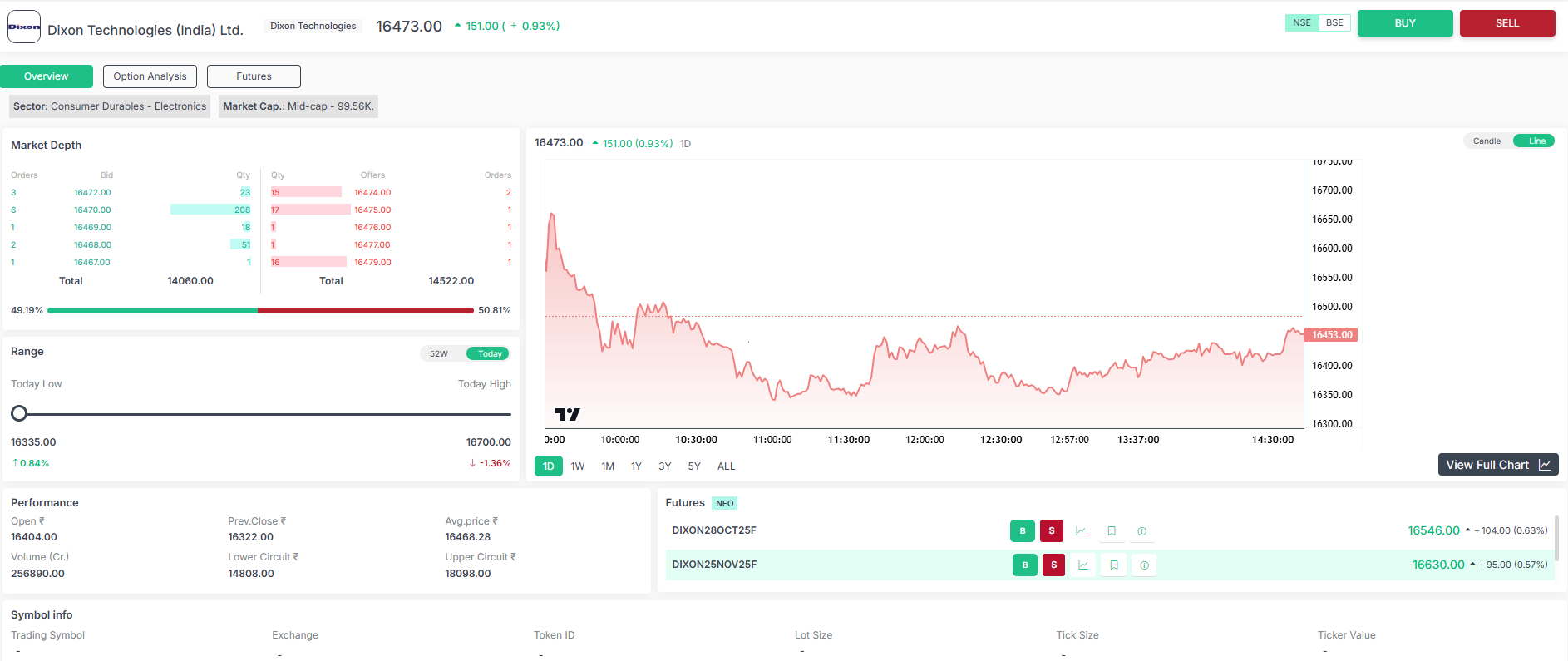
The share of Dixon Technologies (India) Limited has appreciated by approximately 1-year price appreciation of 15.9% through October 2025. Its stock is regarded to have higher risk, with its volatility being at around 3.14 times higher than the Nifty index, signifying it being more susceptible to price variations relative to the overall market. Its recent performance in the market is considered moderate with valuation indicators placing the stock on a premium compared to the average industry peers and the market.
Globally, the firm has been financially exhibiting consistent expansion and operational effectiveness though not spectacular growth. The current price-to-book ratio of approximately 28.63 is significantly higher than the industry average of 5.90, indicating that the stock is priced much higher than its asset value. As such, its twelve trailing months (TTM) price-to-earnings (PE) ratio is around 83.89, nearly double the industry's mean PE of 41.08, reflecting a high overvaluation on earnings basis. Nevertheless, the stock is not presently overbought and could be suitable for those investors looking to undertake moderate exposure to a growth stock with enhanced volatility.
Bharat Electronics Limited
Bharat Electronics Limited(BEL), a state-owned aerospace and defence Indian company , which plays a vital role in manufacture of advanced electronic equipment, semi-conductors, radars, communication systems and weapon control systems. BEL, established in 1954, plays a crucial role in India's defence technology and innovation.
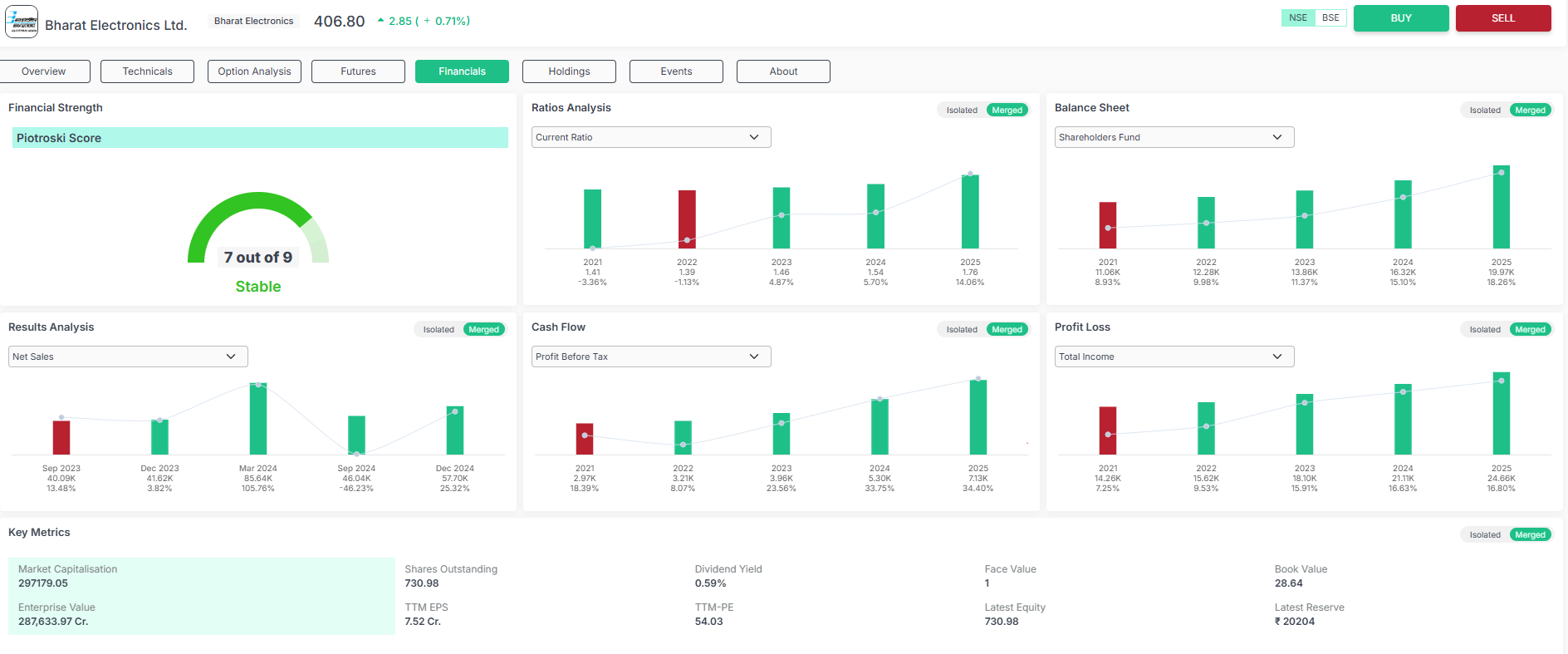
Bharat Electronics Limited (BEL) has recorded a 1-year price appreciation of around 43.16% up to October 2025. The stock involves a moderate amount of risk, as its volatility level is found to be around 1.84 times the Nifty index level, depicting relatively balanced fluctuations. BEL's recent market performance indicates consistent growth, but it is slightly priced higher than the average of the general market.
From a financial perspective, BEL has achieved consistent but modest growth compared with wider market trends. BEL continues to exhibit robust profitability and operational leverage. The price-to-book ratio is approximately 14.77, above the industry average of 9.33, indicating that the stock pays a premium on its book value. Equally, its twelve trailing months (TTM) price-to-earnings (PE) ratio stands at around 54.02, higher than the industry standard of 35.37, which indicates a valuation greater than that of the industry norm. Even with these higher valuation ratios, BEL is not overbought at the moment, and it is a good choice for average exposure to investment due to its fundamentals and prospects.
Vedanta Limited
Vedanta Limited, a natural resource company, also plays a very vital role in India's semi-conductor sector . Vedanta has made a major investment in the chip manufacturing segment. Vedanta was actively involved in boosting India's domestic production of semi-conductors. Vedanta plays a critical role in India's growth of semi-conductors through innovation and technology partnership.
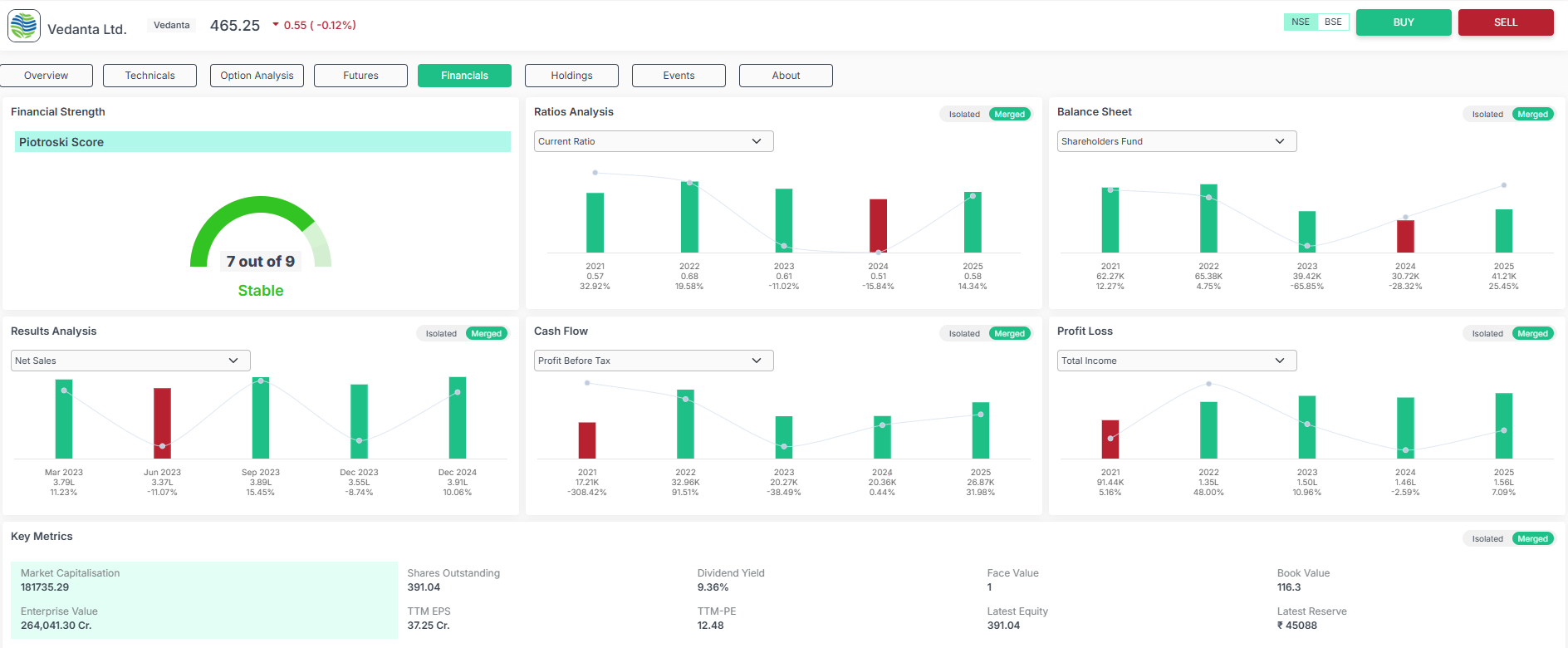
As of October 2025, the 1-year price return of Vedanta Limited stands at around 9.2%. Vedanta is a moderately risky stock with a volatility of around 2.20 times the Nifty, meaning it fluctuates more than the overall index. The stock has moderate recent performance and is currently trading higher than the market average.
Financially, Vedanta has shown consistent but modest growth relative to the overall market. The firm has good profitability and operational discipline. Its price-to-book ratio is approximately 4.85, which is just higher than the industry median of 3.65, indicating a premium valuation of its assets. The TTM price-to-earnings ratio is close to 12.48, which is a bit higher than the sector median of 12.58, showing valuation close to industry standards. Vedanta stock cannot be categorized as overbought, hence good for moderate investment allocation based on its fundamental strengths and outlook.
Conclusion
India's semiconductor industry is set for significant growth, fuelled by the government’s strategic initiatives and global investments. The rise of the semiconductor market, driven by advancements in 5G, AI, and IoT, presents an exciting investment opportunity. Companies like Dixon Technologies, Bharat Electronics, and Vedanta are leading the way, with strong returns and key roles in the nation's tech expansion. As India strengthens its domestic production capabilities, the semiconductor sector is set to thrive, offering a promising avenue for both investors and industry stakeholders in the coming years.
Maximize your investment potential by exploring semiconductor stocks with Enrich Money. Offering a seamless platform to build and diversify your portfolio, Enrich Money allows you to open a free Demat account and tap into high-growth semiconductor manufacturing companies, ensuring a secure and rewarding financial future.
Frequently Asked Questions
What are semiconductor stocks?
Semiconductor stocks represent companies involved in designing and manufacturing semiconductors.
Why is the semiconductor industry in India growing?
The industry is expanding due to increasing demand for electronics and government initiatives supporting local production.
Which are the top semiconductor stocks in India for 2025?
Leading stocks include Dixon Technologies, Bharat Electronics, and Vedanta.
How can I invest in semiconductor stocks in India?
You can invest through direct stock purchases, mutual funds, or ETFs by opening a Demat account.
Why are semiconductors important for modern technology?
Semiconductors power essential devices like smartphones, computers, and automotive components, driving technological advancement.
Disclaimer: This blog is dedicated exclusively for educational purposes. Please note that the securities and investments mentioned here are provided for informative purposes only and should not be construed as recommendations. Kindly ensure thorough research prior to making any investment decisions. Participation in the securities market carries inherent risks, and it's important to carefully review all associated documents before committing to investments. Please be aware that the attainment of investment objectives is not guaranteed. It's important to note that the past performance of securities and instruments does not reliably predict future performance.